
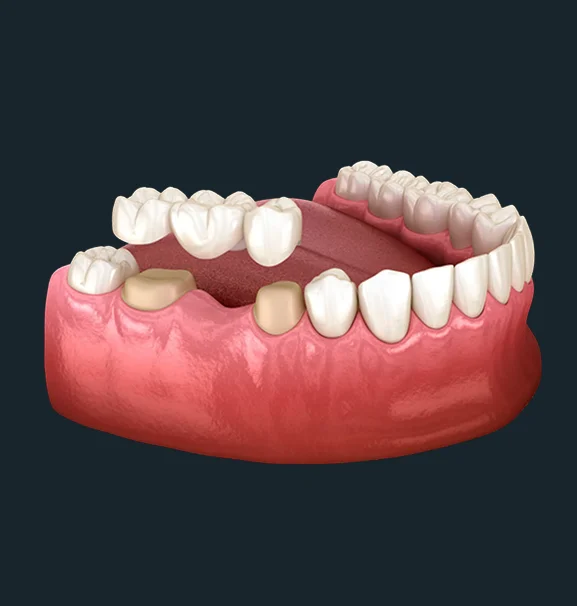
Restore Smile Gap With Dental Bridges
Missing a tooth can affect more than the appearance of your smile. It may make chewing certain foods difficult, change the way you speak, or allow neighboring teeth to shift into the open space. Dental bridges offer a fixed tooth replacement option that fills the gap with an artificial tooth supported by neighboring teeth or dental implants, depending on the design.
At DeMarco Family Dental in Tuckerton, NJ, dental bridge treatment is planned around the condition of your remaining teeth, your bite, and the location of the missing tooth. A custom-made bridge can restore a more complete smile while helping distribute chewing forces across the supporting structures. Whether you have lost a single tooth or need to replace several teeth in a row, an evaluation can help determine which restorative option suits your needs.
Schedule a ConsultationDifferent Types of Dental Bridges
Not every missing tooth requires the same type of restoration. The right dental bridge depends on the location of the gap, the health of the surrounding teeth, and the available support.
- Traditional Dental Bridges
A traditional bridge uses crowns placed on teeth beside the gap to support one or more artificial teeth between them. It is a common option when the neighboring teeth are suitable for crown preparation and can provide adequate support. - Cantilever Dental Bridges
A cantilever bridge is supported by a tooth or teeth on only one side of the missing tooth space. It may be appropriate in selected situations, but bite forces and the location of the gap must be carefully considered. - Maryland Dental Bridges
A Maryland bridge uses a supporting framework or wings bonded to the backs of adjacent teeth. It generally requires less alteration of the supporting teeth than a conventional crown-supported bridge, making it useful for certain cases, particularly in the front of the mouth. - Implant-Supported Bridges
An implant-supported bridge attaches to dental implants rather than relying entirely on natural teeth for support. This may be considered when several adjacent teeth are missing and implant treatment is appropriate. It requires an evaluation of bone support, overall oral health, and other treatment factors.
What Can a Dental Bridge Do for Your Smile?
A dental bridge replaces one or more missing teeth with artificial teeth designed to fit into the open space. By restoring the gap, a bridge can help improve everyday oral function and the appearance of your smile.
- Replace missing teeth that make biting and chewing certain foods difficult.
- Fill visible gaps with replacement teeth designed to complement surrounding teeth.
- Restore tooth positions that may contribute to certain speech difficulties after tooth loss.
- Reduce the space into which neighboring teeth might otherwise drift, although individual results vary.
- A conventional dental bridge is secured in place rather than removed for daily use.
- Replace missing tooth structure to help distribute chewing forces more evenly.
- Enjoy a more complete smile when talking, eating, and interacting with others.
From Missing Tooth to Completed Smile
Getting a dental bridge involves careful planning to help ensure the restoration fits comfortably, looks natural, and functions properly. The number of appointments and the exact steps depend on the type of bridge and your individual dental needs.
Protect Your Bridge With Daily Care
A dental bridge can last for many years with proper care, but keeping the supporting teeth and gums healthy is essential. Brush twice daily with fluoride toothpaste, paying close attention to the gumline around the supporting crowns. Clean beneath the replacement tooth every day using a floss threader, interdental brush, or water flosser to remove trapped food and plaque. These areas can be difficult to reach with regular brushing and flossing alone.
Limit sticky or very hard foods that could loosen or damage your bridge, and maintain regular dental checkups and professional cleanings. If you grind or clench your teeth, ask about a night guard. Contact our office if your bridge feels loose, your bite changes, or swelling or soreness develops.
Restore Comfort and Confidence With Bridges
A missing tooth does not have to affect your smile or everyday comfort. At DeMarco Family Dental in Tuckerton, NJ, we are here to help you explore dental bridges as a solution for replacing missing teeth. Our team will explain your treatment options, answer your questions, and help determine whether a dental bridge is right for your needs. Contact us at 609-296-8700 to discuss dental bridge treatment and take the next step toward restoring your smile.
Request an AppointmentFrequently Asked Questions
About Dental Bridges
A dental bridge is a fixed restoration that replaces one or more missing teeth. Artificial teeth are connected to crowns or other supports on the neighboring teeth, which hold the bridge firmly in place and fill the gap.
Bridges commonly last 10 to 15 years, and many last longer with excellent oral hygiene and regular checkups. Their lifespan depends on the supporting teeth, the bridge design, and your bite habits.
A traditional bridge generally takes two visits spread over a few weeks. The first visit covers preparation and impressions, and the second is for fitting and cementing the permanent bridge once it comes back from the laboratory.
The teeth and gum tissue are numbed before treatment, so you should feel pressure but not sharp pain. Mild soreness and temperature sensitivity can occur for a few days afterward and typically fade quickly.
Yes. Once the permanent bridge is in place, most patients return to a normal diet. It is wise to avoid very hard or sticky foods that could loosen or damage the bridge, and to cut tougher foods into smaller pieces.
Brush twice daily and clean beneath the replacement tooth every day using floss threaders, an interdental brush, or a water flosser. Cleaning this area removes plaque that can lead to decay and gum problems.
Dental implants and partial dentures are the most common alternatives. Implants replace the tooth root and do not rely on neighboring teeth, while partial dentures are removable. Our team can explain which suits your situation after an exam.
Many dental insurance plans cover bridges at least in part, though coverage and waiting periods vary by plan. Our team can help you understand your benefits before treatment begins.
