
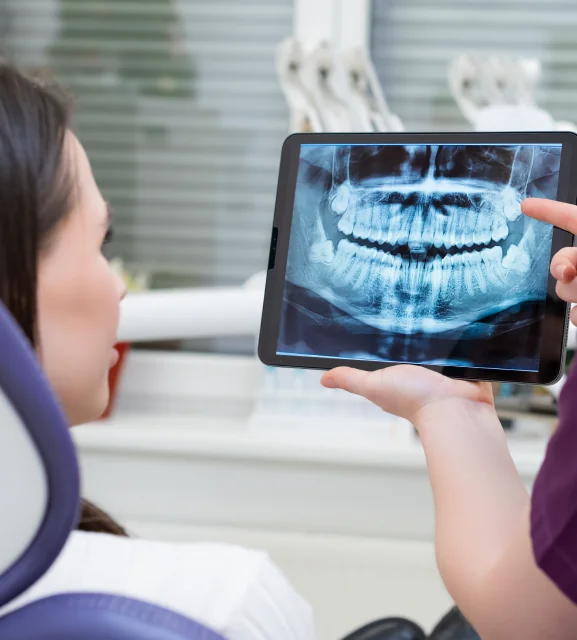
Supporting Dental Care With Digital X-Rays
Some of the most important details about your teeth are impossible to see with the naked eye. Cavities can start between teeth, infections can develop beneath the gumline and bone changes can happen without any pain at all. Digital dental X-rays give our team a detailed look at what is happening beneath the surface, so we can diagnose accurately and treat problems before they grow.
At DeMarco Family Dental in Tuckerton, NJ, we use modern digital imaging as part of our state-of-the-art approach to preventive and restorative care. Instead of film, digital X-rays use a small sensor that captures an image in seconds and displays it right on screen. The result is a faster, more comfortable experience with significantly less radiation than traditional film X-rays, and a clear view that we can review with you on the spot.
Schedule Your ConsultationHow Digital X-Rays Support Better Dental Care
Digital dental radiographs provide valuable information that helps the team evaluate oral health and determine appropriate next steps. When clinically indicated, these images can offer several important benefits.
- Identify decay between teeth and in areas that may be difficult to examine visually.
- Help evaluate root structures and identify signs of infection or other abnormalities.
- Reveal changes in the bone supporting the teeth that may be associated with periodontal disease.
- Help detect impacted teeth, certain cysts, and other abnormalities that may require further evaluation.
- Provide additional diagnostic information when planning fillings, root canal treatment, extractions, and other procedures.
- Allow the team to compare images over time when monitoring an existing condition or evaluating treatment outcomes.
When Are Digital Dental X-Rays Recommended?
Digital dental X-rays may be recommended when a visual examination alone cannot provide enough information about your oral health. They can help investigate persistent tooth pain, sensitivity, swelling, cavities between teeth, changes in supporting bone, and possible infections. X-rays may also be useful when evaluating impacted teeth, planning restorative treatments or oral surgery, and monitoring existing dental conditions. The need for imaging depends on your dental history, symptoms, and individual diagnostic requirements.
What Happens During a Digital Dental X-Ray Appointment?
Taking digital dental X-rays is generally quick and straightforward. The process is designed to capture useful diagnostic images while helping patients remain comfortable throughout the appointment.
The Role of Digital X-Rays in Preventive Dentistry
Routine dental examinations are an important part of maintaining oral health, but certain conditions can develop in areas that are difficult to assess visually. When needed, digital dental X-rays provide additional diagnostic information to help identify potential concerns and guide appropriate treatment decisions.
These images can also be retained in your dental records and reviewed during future visits. Comparing images over time may help the team monitor changes in your teeth and supporting bone, allowing for more informed decisions about your ongoing dental care.
Detect Oral Issues With Digital Imaging
The earlier a dental concern is found, the easier it usually is to treat. Our caring, professional team at DeMarco Family Dental in Tuckerton, NJ uses modern digital X-rays to deliver accurate diagnoses in a comfortable, spa-like setting. Call us at 609-296-8700 to schedule your visit and get the clear answers you deserve about your long-term oral health.
Book Your AppointmentFrequently Asked Questions
About Digital X-Rays
Digital dental X-rays are images of the teeth, gums and jaw taken with an electronic sensor instead of traditional film. The image appears on a computer screen within seconds, allowing our team to view it right away and use it to diagnose cavities, gum disease, infections and other concerns that cannot be seen during a visual exam.
Yes. Digital X-rays use very low levels of radiation, significantly less than traditional film X-rays. With protective lead aprons, thyroid collars and careful use only when needed, they are considered a safe and valuable diagnostic tool.
It depends on your age, oral health, risk of cavities and treatment history. Many patients with healthy mouths need routine bitewing X-rays about once a year or less often, while patients with a higher risk of decay or gum disease may need them more frequently. Our team recommends a schedule tailored to each patient.
The most common types are bitewing X-rays, which show the back teeth and detect cavities between teeth, periapical X-rays, which show a full tooth from crown to root, and panoramic X-rays, which capture the entire upper and lower jaw in one image. A full-mouth series combines several views for a complete picture.
X-rays can reveal decay between teeth and under fillings, bone loss from gum disease, infections at the tooth root, impacted teeth, cracks, cysts and other changes beneath the surface. Many of these conditions do not cause symptoms in the early stages.
No. Taking a digital X-ray is painless. You may feel slight pressure from the sensor in your mouth, but the image itself is captured in a split second and the process is generally quick and comfortable.
Taking the images themselves usually only takes a few minutes. Because digital X-rays appear on screen immediately, there is no waiting for film to develop, and our team can review the results with you during the same visit.
Dental X-rays are generally considered safe when proper shielding is used, and the amount of radiation involved is very low. However, please tell our team if you are or may be pregnant so we can discuss whether imaging is needed right away or can wait until later.
